 Imperial City, royal tombs, food, festivals and seasons in Hue
Places · Royal tombs
The royal tombs: four emperors, four ideas of a garden
The Nguyen emperors built their tombs in the hills and along the Perfume River south of the city, each as a walled landscape of courtyards, lakes and pavilions. Four of them carry most visits: Tu Duc, Khai Dinh, Minh Mang and Gia Long. This page sets out what each is like, how far it is, what it costs, and the combinations that work.
At a glance
- Tu Duc
- About 8 km, 150,000 VND
- Khai Dinh
- About 10 km, 150,000 VND
- Minh Mang
- About 14 km, 150,000 VND
- Gia Long
- About 16 km, 150,000 VND
- Three tombs
- Half a day by car
- All tombs
- About two days
Sources: Vietnam National Authority of Tourism — Tomb of Tu Duc; Thua Thien Hue portal — Khai Dinh tomb; VOV — the royal tombs of Hue; Vietnam National Authority of Tourism — an inside guide to the Hue tombs; Thua Thien Hue (now Hue City) portal — Hue Monuments Complex ticket and guide prices · last checked .
What the tombs are
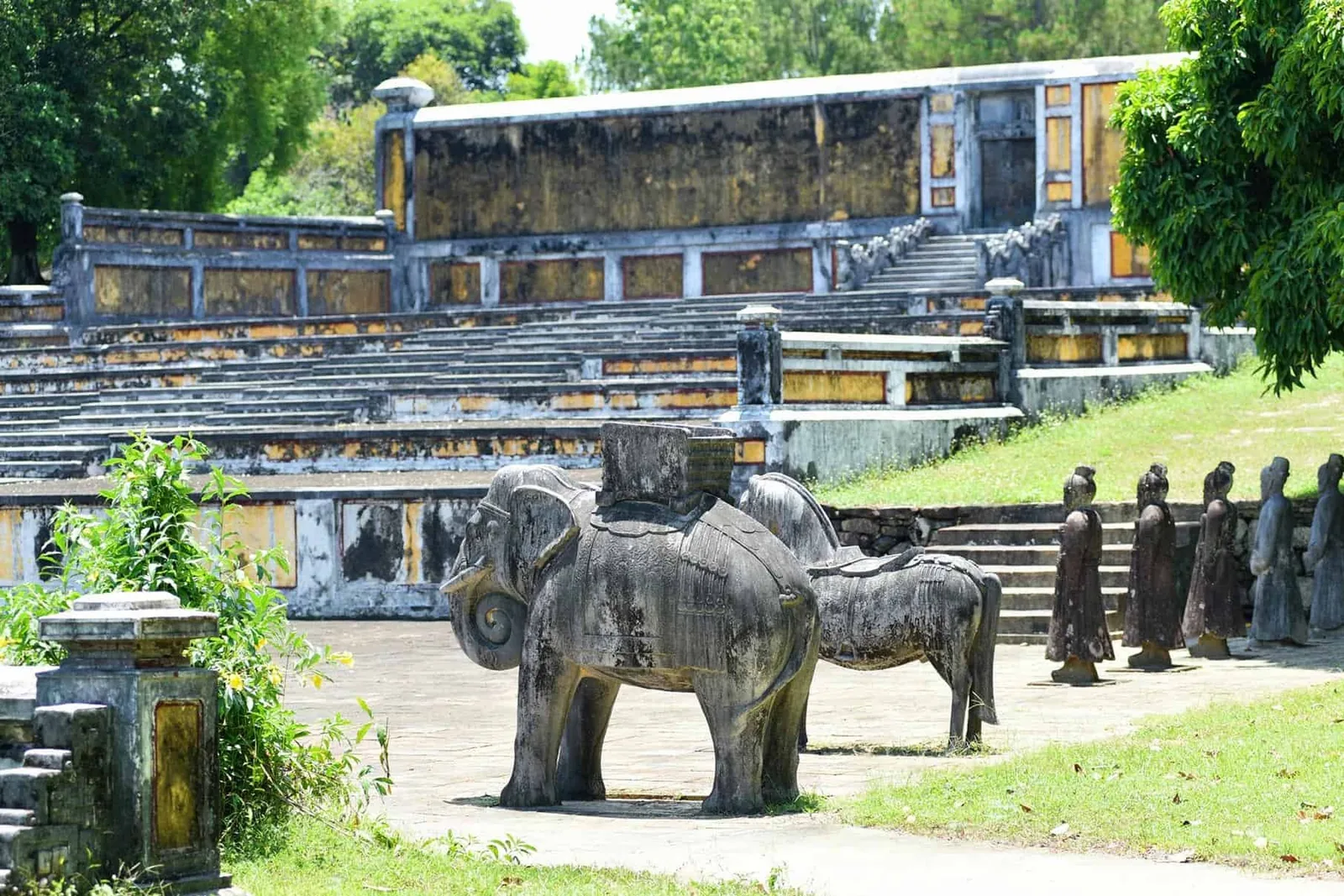
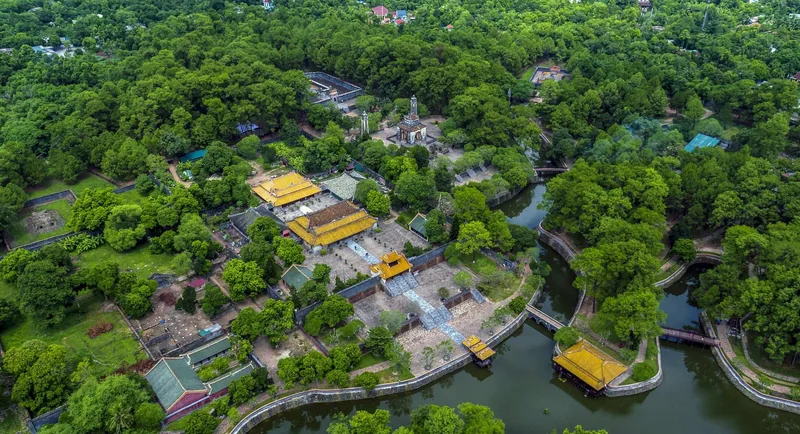
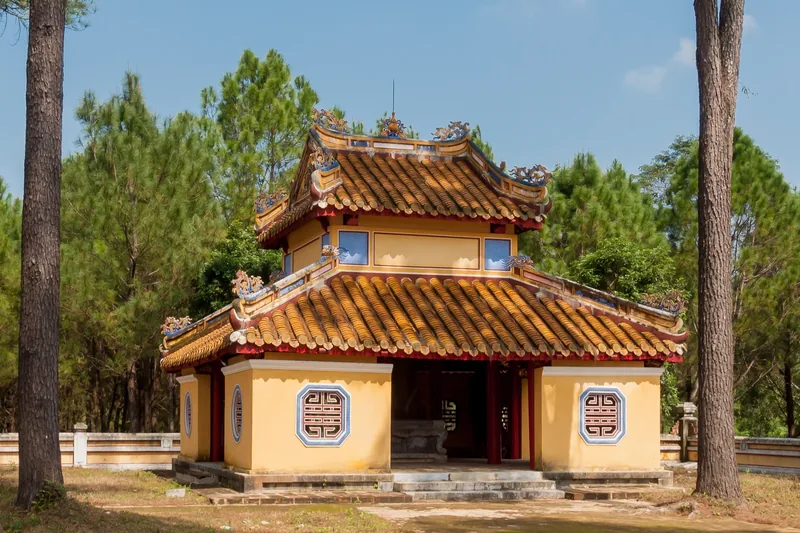
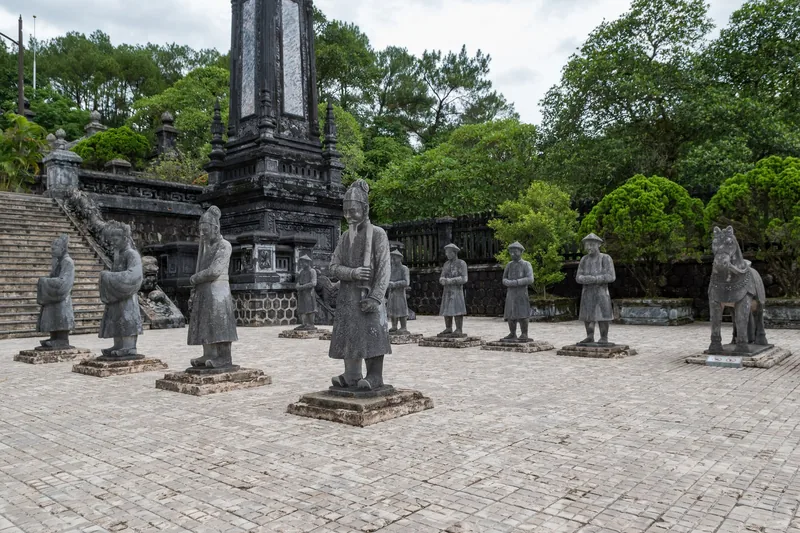
A Nguyen royal tomb is not a single monument. Each emperor chose a site by geomancy, often during his lifetime, and built a walled park around it: an approach with stone mandarins, elephants and horses, a stele pavilion recording his reign, temples for his worship, and the burial place itself, usually sealed. Several emperors used the gardens while alive, as places to write, fish or receive guests.
The result is that the tombs differ far more from one another than the palaces in the Imperial City do. Tu Duc's is a lakeside retreat, Minh Mang's a formal axis through water and pine, Khai Dinh's a steep concrete-and-mosaic statement of the 1920s, and Gia Long's a scatter of family tombs in open country. Visiting two or three that contrast is more rewarding than seeing all of them in a hurry.
Seven emperors' tombs are part of the UNESCO-listed Complex of Hue Monuments. The four below are the ones most visitors choose; Thieu Tri and Dong Khanh are covered briefly further down.
Sources: Vietnam National Authority of Tourism — an inside guide to the Hue tombs; Wikipedia — Complex of Hue Monuments · last checked .
The four main tombs
Tu Duc (Khiem Lang)
About 8 km from the centre in Thuy Xuan, Tu Duc's tomb was built from December 1864 to 1867, while the emperor was still alive and used as his retreat. Nearly 50 structures sit on terraces in a narrow valley around Luu Khiem lake, where Tu Duc fished and wrote poetry from a waterside pavilion. It is the closest of the big tombs and among the busiest, so the national tourism authority advises early morning or late afternoon. The tomb of his adopted son, Emperor Kien Phuc, built in 1884, lies inside the same grounds.
Khai Dinh (Ung Lang)
Khai Dinh's tomb is the last royal tomb of the dynasty and looks nothing like the others. Work began on 4 September 1920 and took 11 years, on Chau Chu mountain about 10 km from Hue. It was built with iron, steel, cement and slate tiles from France and porcelain and coloured glass from Japan. Up to 127 steps climb through courtyards to Thien Dinh palace, whose interior is covered with porcelain and glass mosaics around a one-ton bronze statue of the emperor cast in France in 1922. It is compact: an hour is enough, but the steps are steep and exposed.
Minh Mang (Hieu Lang)
About 14 km from the centre on Cam Khe mountain, Minh Mang's tomb was completed in 1843 after three years of work. Its buildings are laid out on a long central axis that crosses two lakes on bridges, through pine-covered hills; the lotus ponds flower from spring. The burial mound sits behind a gate opened once a year, so you walk up to it rather than in. Allow 60 to 90 minutes; the distances inside are longer than they look on the map.
Gia Long (Thien Tho Lang)
The oldest of the tombs, completed in 1820, about 16 km from the city in Huong Tho, and the least visited. It is a complex of several royal family tombs spread across open countryside rather than one enclosure. The route there follows the river through villages and overgrown graveyards; the national tourism authority suggests a full morning or afternoon, and a motorbike or bicycle for the journey. Expect few facilities.
Sources: Vietnam National Authority of Tourism — Tomb of Tu Duc; VOV — the royal tombs of Hue; Thua Thien Hue portal — Khai Dinh tomb; Vietnam National Authority of Tourism — an inside guide to the Hue tombs · last checked .
Tickets for the tombs
| Ticket | Adult | Child 7–12 |
|---|---|---|
| Minh Mang, Tu Duc or Khai Dinh (each) | 150,000 VND | 30,000 VND |
| Gia Long | 150,000 VND | Free |
| Dong Khanh | 100,000 VND | Free |
| Thieu Tri | 50,000 VND | Free |
| Minh Mang + Gia Long | 240,000 VND | 30,000 VND |
| Tu Duc + Dong Khanh | 200,000 VND | 30,000 VND |
| Imperial City + two of Minh Mang, Tu Duc, Khai Dinh | 420,000 VND | 80,000 VND |
| Imperial City + Minh Mang + Tu Duc + Khai Dinh | 530,000 VND | 100,000 VND |
| Official guide at one of the three main tombs | 100,000 VND per guide per day |
Prices are the official route and site prices published by the city; the 2026 fee resolution kept them and added an all-sites ticket. Combination tickets are sold at the monument ticket counters and through the official e-ticket service. The full list is on the tickets page.
Sources: Thua Thien Hue (now Hue City) portal — Hue Monuments Complex ticket and guide prices; Hue tourism portal (khamphahue.com.vn) — entrance fees; Bao Van Hoa — fee resolution applying from 2026 · last checked .
How to combine them
The national tourism authority's rule of thumb is half a day for two or three tombs and two full days for all of them. In practice the combinations below work, with a car and driver or a motorbike:
| Plan | Tombs | Time | Ticket logic |
|---|---|---|---|
| Short morning | Tu Duc + Khai Dinh | 3 to 4 hours | Two single tickets, or a combination with the Imperial City |
| Classic half day | Tu Duc + Khai Dinh + Minh Mang | 5 to 6 hours | Four-site route if you also do the Imperial City |
| Quiet half day | Minh Mang + Gia Long | 5 to 6 hours | 240,000 VND pair ticket |
| Short and cheap | Tu Duc + Dong Khanh | 2 to 3 hours | 200,000 VND pair ticket; the two are close together |
Times include driving and a reasonable look at each site; they are planning estimates. Start at the furthest tomb on your list and work back towards the city, so the shortest drive is at the end of a hot day. Thien Mu Pagoda is on the way back from the western tombs, and some boat trips from Toa Kham pier stop near Minh Mang; see the river page.
Sources: Vietnam National Authority of Tourism — an inside guide to the Hue tombs · last checked .
When to go
Each tomb is a walk of up to a kilometre or more on paths and steps, mostly in sun. From May to August average highs are around 33°C, so mornings are the time to be there. In the wet months, September to December, rainfall rises to an average of about 520 mm in October, the steps at Khai Dinh and the earth paths at Gia Long become slippery, and the country roads to the outer tombs are at their worst. February to April is the most comfortable season, and the lotus at Minh Mang flowers from spring.
Sources: Weather2Travel — Hue climate averages (climate data site); Vietnam National Authority of Tourism — an inside guide to the Hue tombs; Government of Canada — Vietnam travel advice · last checked .
Getting there and rough costs
There is no public transport worth relying on to the tombs. The options are a car with driver, a ride-hailing car booked stop by stop, a motorbike taxi or hired motorbike, or a bicycle for the nearer ones. The Canadian government's travel advice recommends hiring a driver rather than riding a motorbike, and notes that a Vietnamese licence is needed for engines of 50cc or more.
| Item | Rough range | Note |
|---|---|---|
| Tomb tickets | 150,000 VND each for the main three | Or a combination ticket |
| Car with driver, half day | Agree a price in advance | Varies by season and number of stops |
| Boat towards the tombs | Private boats from 300,000–500,000 VND for shorter trips | Longer upriver trips cost more |
| Drinks and snacks | Sold at the main tomb gates | Bring water for Gia Long |
We do not publish car hire prices because they vary with fuel, season and how long the driver waits. Ask for the price for the whole route, including waiting time, before you set off, and check before you go.
Sources: Government of Canada — Vietnam travel advice; Local Vietnam — dragon boats in Hue, prices and routes (independent guide); Thua Thien Hue (now Hue City) portal — Hue Monuments Complex ticket and guide prices · last checked .
Thieu Tri and Dong Khanh
Thieu Tri's tomb is the only Nguyen tomb without an enclosing wall and the only one facing north-west; much of it is in ruins apart from a restored temple gate, and it is often empty. Dong Khanh's tomb sits on a hill near Tu Duc and mixes Vietnamese layout with European decoration; its construction stretched over more than three decades. Both are cheap to enter and suit a second visit to Hue or a particular interest in the dynasty.
Sources: Vietnam National Authority of Tourism — an inside guide to the Hue tombs; VOV — the royal tombs of Hue · last checked .
Pictures
Who should skip the tombs, and when
- If steps are a problem: Khai Dinh has up to 127 and Minh Mang's axis is long. Tu Duc is the gentlest.
- If you have one day in Hue and have not yet seen the Imperial City: do that first.
- On days of heavy rain or after floods in October and November, when roads to the outer tombs can be cut.
- If you plan to ride a hired motorbike without a valid licence: insurance may not cover you.
- If you only want photographs: Khai Dinh in an hour gives the most distinctive picture for the least time.
Common questions
Questions readers ask
Which tomb should I see if I only have time for one?
It depends on what you want. Khai Dinh is the most unusual and the quickest. Tu Duc is the nearest and the most landscaped. Minh Mang is the most extensive and the most formal.
Can I visit the tombs by boat?
Partly. Boats from Toa Kham pier go upriver, but the tombs are inland from the landings and a round trip by boat takes most of a day. Many people go one way by boat and return by road.
Are the tombs open every day?
They are open daily in normal conditions, with similar daytime hours to the Imperial City. They can close after storms or floods; check locally on the day.
Is the four-site ticket valid for more than one day?
The route tickets cover each site once. The 2026 all-sites ticket is valid for five days from purchase; for other combinations, ask at the counter how long the ticket is valid before you buy.
Related
Read next
Plan · Tickets
Tickets and hours
Every Hue monument ticket and combination route with child prices, guide fees, free days, hours and the 2026 changes.
Read more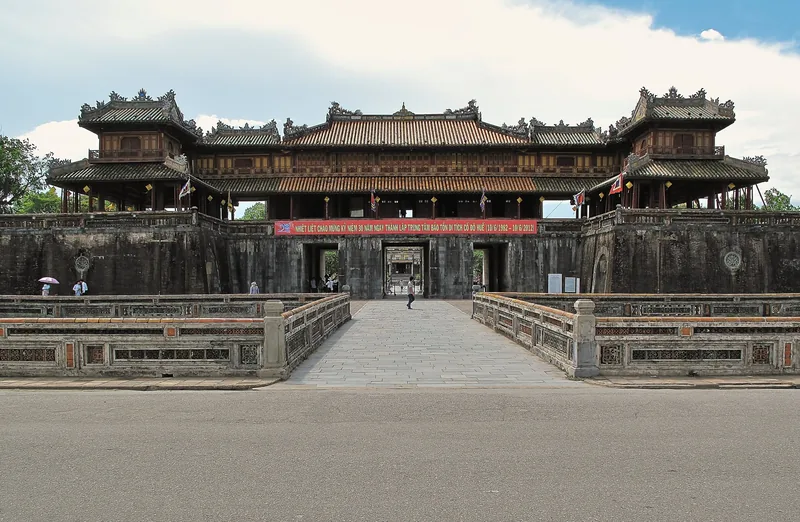
Places · Imperial City
Imperial City
The Imperial City's two zones, what has been rebuilt, tickets, hours, night openings and when not to go.
Read more
Places · Perfume River
Perfume River and Thien Mu
Thien Mu Pagoda, dragon boats from Toa Kham pier, ca Hue music evenings, boat price ranges and when to skip them.
Read more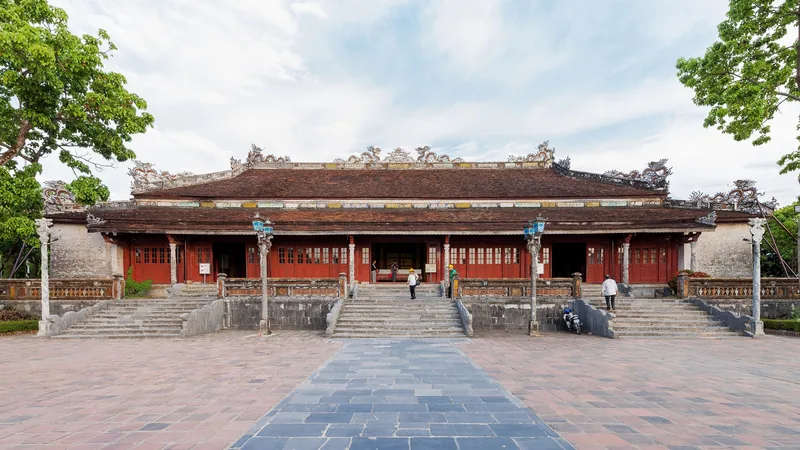
Plan · Length of stay
How many days
One, two and three-night plans for Hue, the order to see the Imperial City, tombs and river, and which ticket fits.
Read more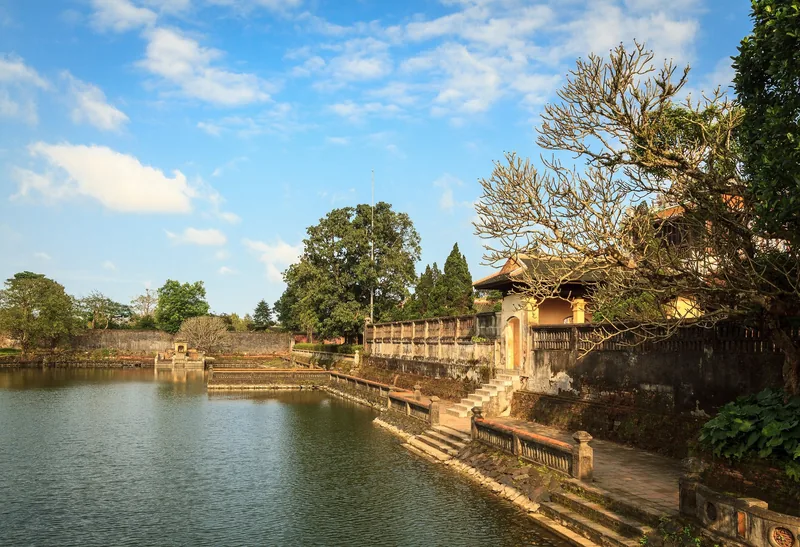
Plan · Weather
Weather and when to go
Month-by-month Hue weather: dry spring, hot summer, the September–December rains, floods and what to plan around.
Read more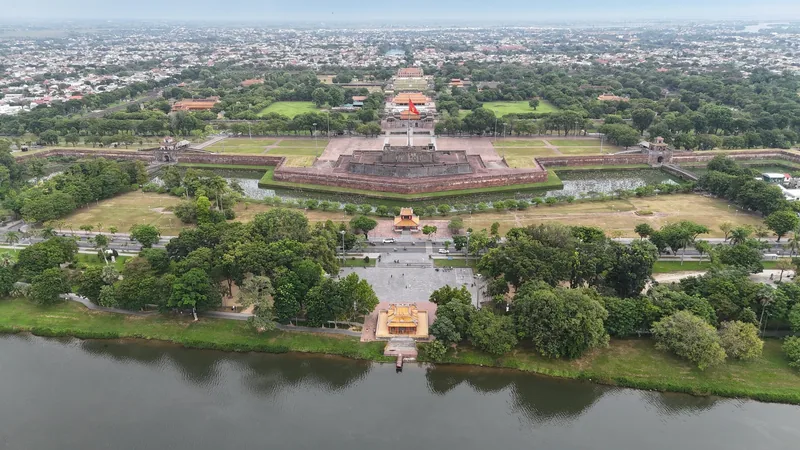
Places
Places
Overview of the Imperial City, the royal tombs, the Perfume River and Tam Giang lagoon, with time and cost for each.
Read more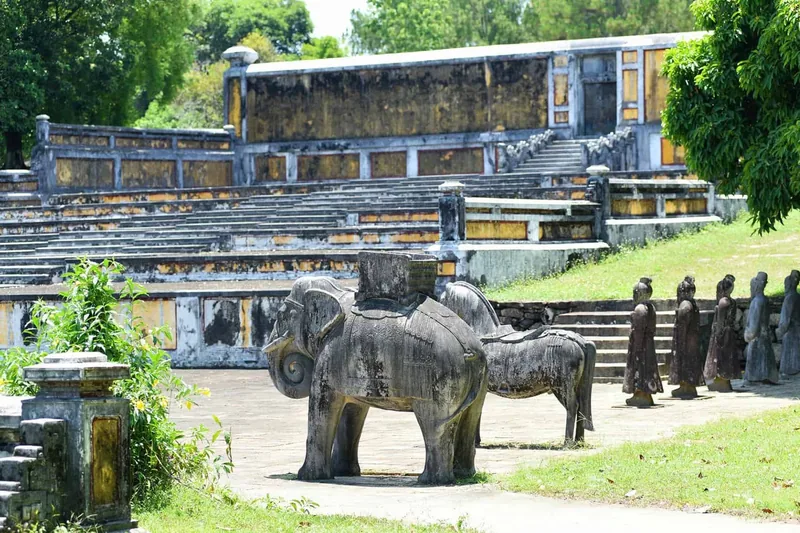
Start planning
Send a correction or a question
Tell us which page and which line, what you found at the ticket gate, on the river or on an official notice, and when. A link to the source helps us check it.