 Imperial City, royal tombs, food, festivals and seasons in Hue
Culture · Food
Eating in Hue: royal, street and temple
Hue cooks in three registers: the elaborate cuisine of the Nguyen court, the cheap and fiery street food of the city, and a vegetarian tradition carried by its pagodas. This page explains the dishes worth knowing, when in the day they are eaten, and the parts of the city where you find them. It does not rank restaurants.
Why Hue's food is different
For 143 years Hue was the seat of the court, and the court ate differently from everyone else. According to the government news portal, Hue claims almost 1,700 of Vietnam's 3,000 traditional dishes, divided into royal, folk and vegetarian cooking. Royal dishes were judged on colour, balance and presentation as much as taste; folk dishes are small, spicy and cheap; and the vegetarian line grew from the Buddhism practised at court.
For a visitor the practical result is a city of small plates. Many Hue specialities come in portions that make sense only if you order several, and many are eaten at a particular time of day: noodles in the morning, rice cakes in the afternoon, sweet soups in the evening.
Sources: Government news portal — Hue cuisine · last checked .
Bun bo Hue
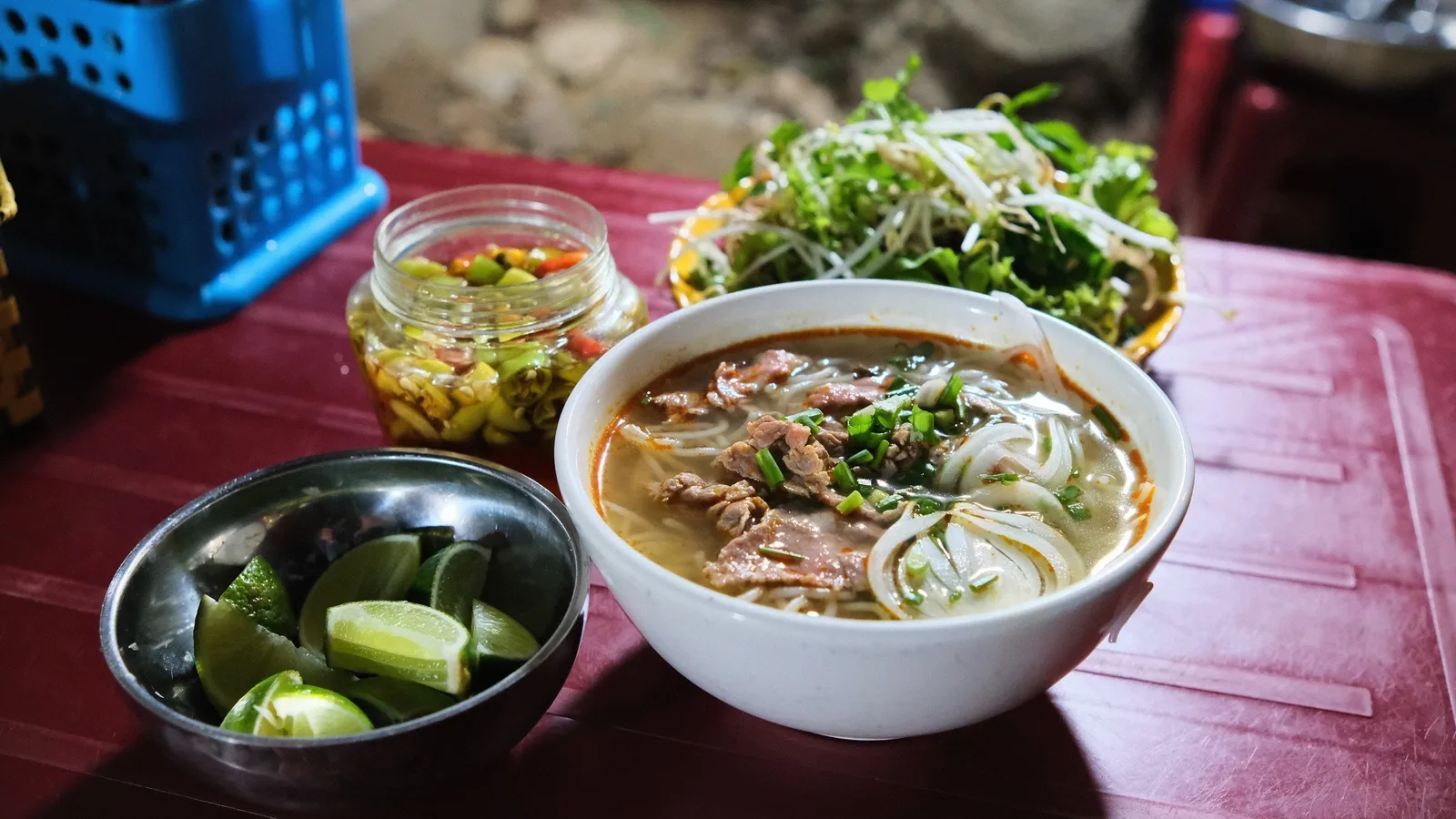
The city's most widely known dish is a bowl of round rice noodles in a beef and pork broth flavoured with lemongrass and fermented shrimp paste, served with beef shank, pork knuckle and often cubes of congealed blood, and topped with herbs, banana blossom and chilli oil. It is spicier and more pungent than pho. The government portal calls it the star among the city's rustic dishes.
It is above all a breakfast dish. Street stalls and small shops serve it from early morning, and many sell out by late morning. You find it all over the city, on both banks, rather than in one district; follow the stools on the pavement. A street bowl costs tens of thousands of dong; check the price as you order.
Sources: Government news portal — Hue cuisine · last checked .
Com hen and Con Hen islet
Com hen is rice with tiny river clams, served cold or at room temperature with crunchy vegetables, herbs, roasted peanuts, crispy pork fat, chilli and fermented shrimp sauce, with a cup of hot clam broth on the side. A 2020 VnExpress report traced it to Hue's habit of using up rice left from the night before.
The clams come from Con Hen, an islet in the Perfume River in Vi Da ward, east of the centre, and the lanes of Vi Da and the islet itself remain the area most associated with the dish. Hawkers usually sell from about 07:00 until noon. Bowls are small; in 2020 they cost 7,000 to 10,000 VND and people ate two or three. Expect higher prices now, and confirm before you travel.
Sources: VnExpress — com hen in Hue (2020) · last checked .
Banh beo, banh bot loc, banh khoai and the rice cakes
- Banh beo: small steamed rice-flour cakes in individual saucers, topped with dried shrimp and crispy pork skin, eaten with fish sauce. Served by the trayful.
- Banh bot loc: chewy, translucent tapioca dumplings with shrimp and pork, sometimes wrapped in banana leaf.
- Banh nam: flat rice-flour parcels steamed in banana leaf with a thin layer of shrimp and pork.
- Banh khoai: a crisp fried rice pancake folded around shrimp, pork and bean sprouts, eaten with herbs and a peanut and liver sauce.
- Banh cuon thit nuong: grilled pork rolled in rice paper with herbs.
These are afternoon and early-evening food, sold in small shops that specialise in one or two of them and serve mixed platters. Ordering a little of each is normal.
Sources: Government news portal — Hue cuisine · last checked .
Royal cuisine
Court cooking in Hue was about display: dishes carved and arranged to look like phoenixes or peacocks, ingredients chosen to balance colour and the five elements, and tableware set by dynastic rules. The traditional list of eight royal delicacies, including bird's nest and items such as bear's paw and elephant's foot, is a symbol of the court rather than a menu anyone serves today.
What visitors can eat now is a recreation: set banquets of many small courses, sometimes with royal costume hire and court music, served in restaurants and garden houses around the city. In the Imperial City itself, the 2026 summer festival included a royal banquet at Duyet Thi Duong theatre at 1.7 million VND per person, limited to 130 guests a night, and a food fair at Phu Noi Vu from 24 April to 2 May. These are festival events, not a permanent service.
Sources: Government news portal — Hue cuisine; VnEconomy — night programmes in the Imperial City, April 2026 · last checked .
Vegetarian Hue
Hue's vegetarian cooking comes from its pagodas. The government portal counts about 125 vegetarian dishes and names the large pagodas Dieu De, Thien Mu and Giac Hoang as places that prepare them. On the first and fifteenth days of the lunar month many residents eat vegetarian, and vegetarian restaurants are easy to find across the city, often near pagodas.
Sources: Government news portal — Hue cuisine · last checked .
Che and the evening
Che, sweet soups and puddings served in a glass or bowl, are the evening snack. Hue has more than 30 kinds, made with coconut milk, beans, taro, corn, pomegranate-coloured tapioca and lotus seeds; lotus seed che is the classic summer choice. Che shops cluster on the south bank and along the streets near the river, and stay busy late.
Sources: Government news portal — Hue cuisine · last checked .
Where in the city to eat what
| Area | What it is known for | When |
|---|---|---|
| Vi Da ward and Con Hen islet, east of the centre | Com hen and clam noodles | Morning to noon |
| Around Dong Ba market, north bank | Market stalls: noodles, rice cakes, snacks | Morning |
| South-bank streets near the river | Che, rice cakes, evening snacks | Afternoon to late evening |
| Near the large pagodas (Dieu De, Thien Mu, Giac Hoang) | Vegetarian cooking | Lunch; lunar 1st and 15th |
| Both banks, everywhere | Bun bo Hue | Early morning |
We describe areas rather than naming stalls, because individual businesses change and we do not rank them. A busy stall with a fast turnover is the usual local signal.
Sources: VnExpress — com hen in Hue (2020); Government news portal — Hue cuisine · last checked .
Practical points
- Many street stalls sell one dish and close when it runs out, often by late morning for noodles.
- Prices are rarely posted at small stalls; ask before you sit down if you are unsure.
- Hue food is spicy by Vietnamese standards. Chilli is often added at the table, so you can leave it out.
- Fermented shrimp paste is central to bun bo and com hen; if you dislike strong flavours, try banh beo first.
- Carry small notes; many stalls do not take cards.
For food events, such as the bun festival held at Thuong Bac Park in 2023, see the festival calendar.
Sources: Hue tourism portal — Hue Festival pages · last checked .
Common questions
Questions readers ask
What time of day is bun bo Hue eaten?
Mainly at breakfast. Many stalls open early and sell out by late morning, though some shops serve it all day.
Is Hue food very spicy?
Spicier than most Vietnamese food, but chilli is often added at the table, so you can ask for it on the side.
Can I eat a royal banquet in Hue?
Yes, as a recreation in restaurants and garden houses, and during some festivals inside the Imperial City. Prices vary widely; ask what is included.
Is it easy to eat vegetarian in Hue?
Yes. Hue has a strong vegetarian tradition linked to its pagodas, and vegetarian restaurants are found across the city.
Related
Read next
Culture · Events
Festival Hue and events
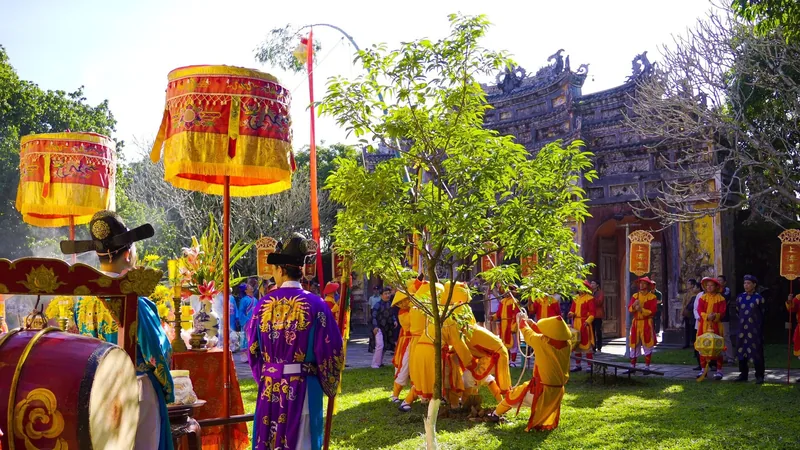
Festival Hue 2026 by season, the 13–18 June arts festival week, citadel night events, Hon Chen and the lunar calendar.
Read more
Places · Perfume River
Perfume River and Thien Mu
Thien Mu Pagoda, dragon boats from Toa Kham pier, ca Hue music evenings, boat price ranges and when to skip them.
Read more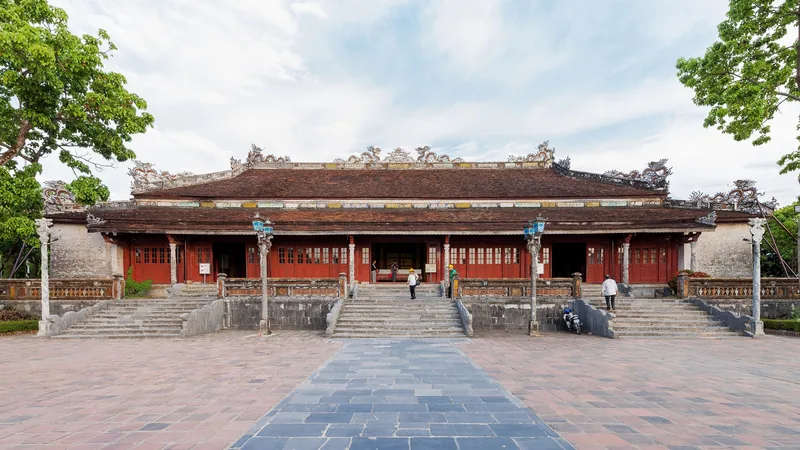
Plan · Length of stay
How many days
One, two and three-night plans for Hue, the order to see the Imperial City, tombs and river, and which ticket fits.
Read more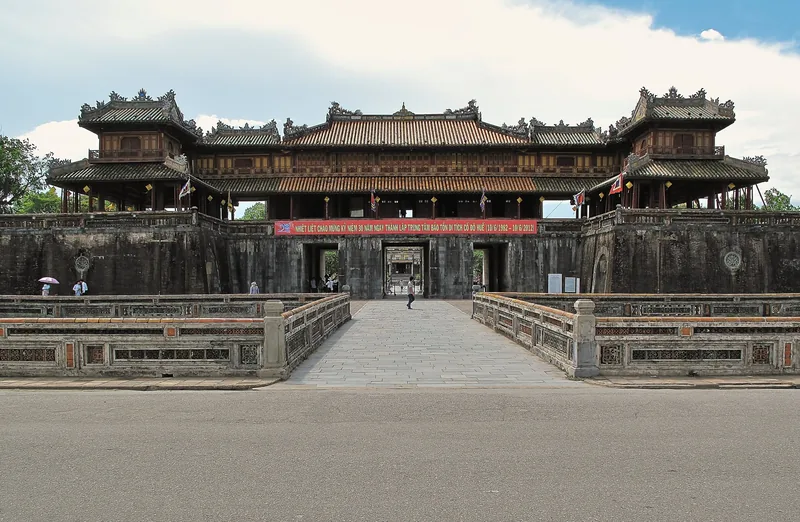
Places · Imperial City
Imperial City
The Imperial City's two zones, what has been rebuilt, tickets, hours, night openings and when not to go.
Read more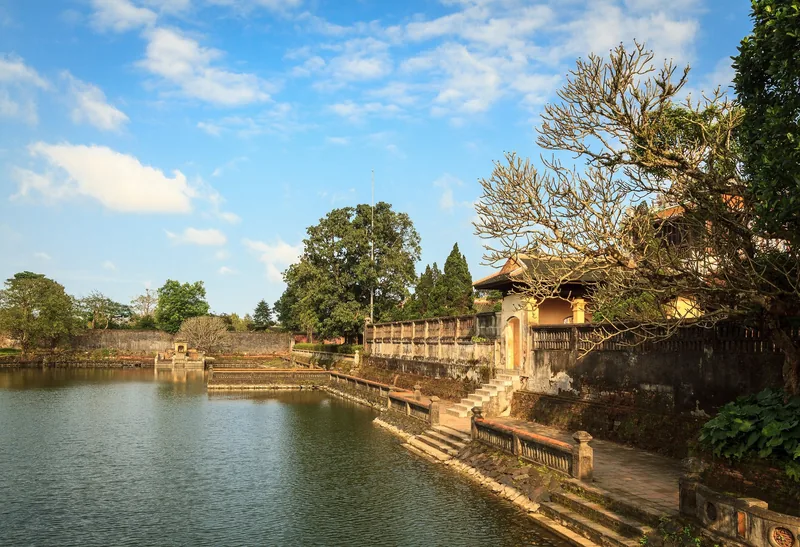
Plan · Weather
Weather and when to go
Month-by-month Hue weather: dry spring, hot summer, the September–December rains, floods and what to plan around.
Read more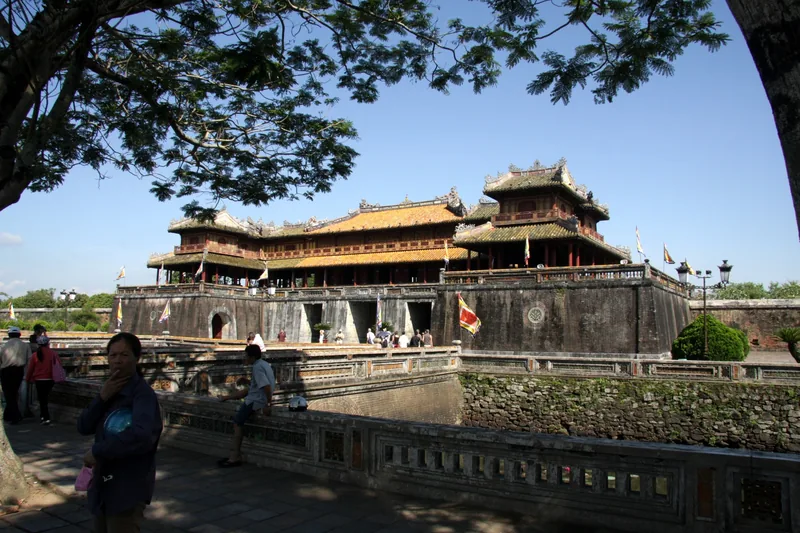
Independent guide to Hue
Home
Start here: tickets, places, seasons, food and transport for an independent visit to Hue.
Read more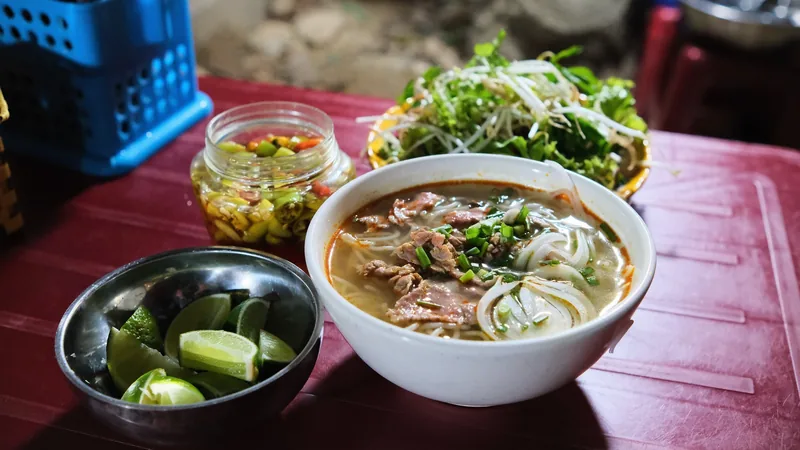
Start planning
Send a correction or a question
Tell us which page and which line, what you found at the ticket gate, on the river or on an official notice, and when. A link to the source helps us check it.