 Imperial City, royal tombs, food, festivals and seasons in Hue
Plan · Length of stay
How many days Hue needs
Most visitors give Hue one night and spend it rushing between the Imperial City and a tomb. Two nights lets the monuments breathe; three adds the river, the food and a day trip. Here is what each length of stay realistically covers, and the order that makes the most of the heat and the tickets.
The short answer
| Stay | What it covers | Ticket that fits |
|---|---|---|
| One night | Imperial City and one tomb, or Imperial City and the river | Single tickets, or the 420,000 VND route if you add two tombs |
| Two nights | Imperial City, three main tombs, Thien Mu, food | Imperial City + three tombs, 530,000 VND |
| Three nights | All of the above, plus a day trip or Gia Long and the smaller sites | All-sites ticket, 600,000 VND, valid 5 days |
The national tourism authority's own estimate is half a day for two or three tombs and two full days for all of them, in addition to the Imperial City's two to four hours. Those numbers are the base of the plans below.
Sources: Vietnam National Authority of Tourism — an inside guide to the Hue tombs; VietJet Air travel guide — Imperial City hours, combos, visit length (airline guide); Thua Thien Hue (now Hue City) portal — Hue Monuments Complex ticket and guide prices; Bao Van Hoa — fee resolution applying from 2026 · last checked .
One night
Arrive the afternoon before if you can, so the next morning starts at the Imperial City gate at opening time. Two to three hours there takes you to mid-morning. After lunch, take a car to Tu Duc and Khai Dinh, the two nearest big tombs, about 8 and 10 km from the centre, and come back by late afternoon. If you arrive on the morning train from Hanoi, swap the order: tombs in the late afternoon, when it is cooler.
What you give up: Minh Mang, the river, and any time to eat slowly. One night works if Hue is a stop between Hanoi and Hoi An and you accept seeing it at a trot.
Sources: Vietnam National Authority of Tourism — Tomb of Tu Duc; Thua Thien Hue portal — Khai Dinh tomb · last checked .
Two nights
- 01
Day one, morning
Imperial City at opening time, three to four hours including the Forbidden City and Dien Tho.
- 02
Day one, afternoon
Rest through the heat; late afternoon boat or road trip to Thien Mu Pagoda.
- 03
Day one, evening
Food on the south bank, or a ca Hue boat from Toa Kham pier.
- 04
Day two, morning
Car to Minh Mang, then Khai Dinh, then Tu Duc, working back towards the city.
- 05
Day two, afternoon
Lunch, then the Museum of Royal Antiquities or a walk inside the citadel walls.
This uses the 530,000 VND four-site route, which saves 120,000 VND per adult over single tickets. Starting the tombs at Minh Mang, about 14 km out, puts the shortest drive at the end of the day.
Sources: Thua Thien Hue (now Hue City) portal — Hue Monuments Complex ticket and guide prices; VOV — the royal tombs of Hue · last checked .
Three nights
Add a third day for one of three things. Gia Long, the oldest and least visited tomb, about 16 km from the city, fills a morning by motorbike or car through villages along the river. A day trip, to the DMZ in Quang Tri or over the Hai Van Pass to Lang Co, takes a full day. Or spend the day on food and the lagoon: com hen in Vi Da in the morning, rice cakes in the afternoon, and Tam Giang at sunset.
With three or more nights and an interest in the smaller sites, the all-sites ticket introduced in 2026, 600,000 VND for an adult and valid for five days, covers Gia Long, Dong Khanh, Thieu Tri, the museum and the temples as well.
Sources: Vietnam National Authority of Tourism — an inside guide to the Hue tombs; Bao Van Hoa — fee resolution applying from 2026 · last checked .
Order matters more than length
- See the Imperial City first, in the morning. It gives context for everything else and the courtyards are hottest after midday.
- Do the tombs by car in one sweep, furthest first, rather than one at a time from the city.
- Put the river, the pagoda and the lagoon in the late afternoon.
- Leave a spare half day in the rainy season, September to December, in case a storm closes the outer sites.
- Check the festival calendar: a night event in the citadel can be worth rearranging a day for.
Fitting Hue into a longer route
Hue is usually a stop between Hanoi and Hoi An. From Hanoi the overnight train arrives in the morning, which makes a good first day. To Hoi An, about 125 km south, the transfer takes 3 to 5 hours by bus or about 3 to 3.5 hours by car, and crossing the Hai Van Pass on the way turns the transfer into a sight. In October and November, when central Vietnam floods, consider shortening the Hue and Hoi An part of the route rather than skipping it entirely.
Sources: vietnamtourism.com — Hanoi to Hue timetable (independent site); Vietnam Airlines — Hoi An to Hue guide; Government of Canada — Vietnam travel advice · last checked .
Who needs more, and who needs less
- Photographers and people who read inscriptions: add a day; the tombs reward slow visits.
- Families with young children: two nights, with long midday breaks, works better than one packed day.
- People with limited mobility: plan around steps; Khai Dinh has up to 127 and much of the Imperial City is gravel.
- Travellers who care mainly about beaches: one night is enough, then move on to the coast.
Common questions
Questions readers ask
Is one day enough for Hue?
For the Imperial City and one or two tombs, yes, if you start early. It is not enough for the river, the food and the further tombs.
Should I see the Imperial City or the tombs first?
The Imperial City, in the morning. It explains the dynasty and it is the hotter site later in the day.
Can I combine Hue with Hoi An in one day?
Only as a transfer with a short stop. The two are about 125 km apart, and each deserves at least a night.
Which ticket suits a two-night stay?
The four-site route covering the Imperial City, Minh Mang, Tu Duc and Khai Dinh, at 530,000 VND for an adult.
Related
Read next
Plan · Tickets
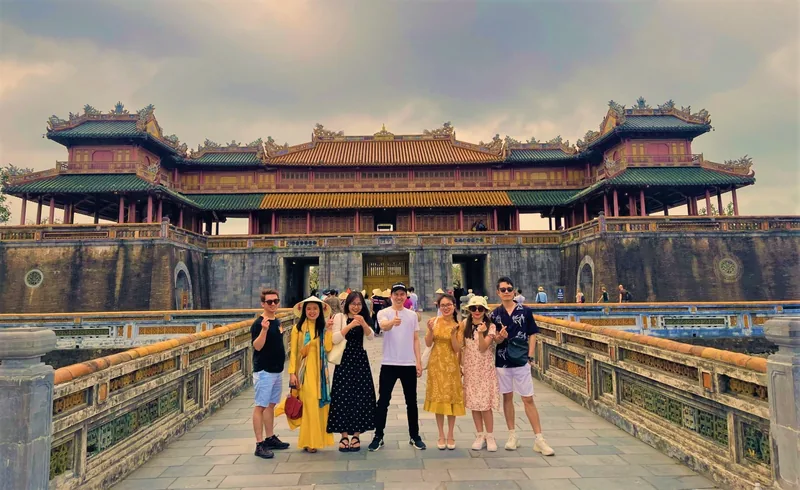
Tickets and hours
Every Hue monument ticket and combination route with child prices, guide fees, free days, hours and the 2026 changes.
Read more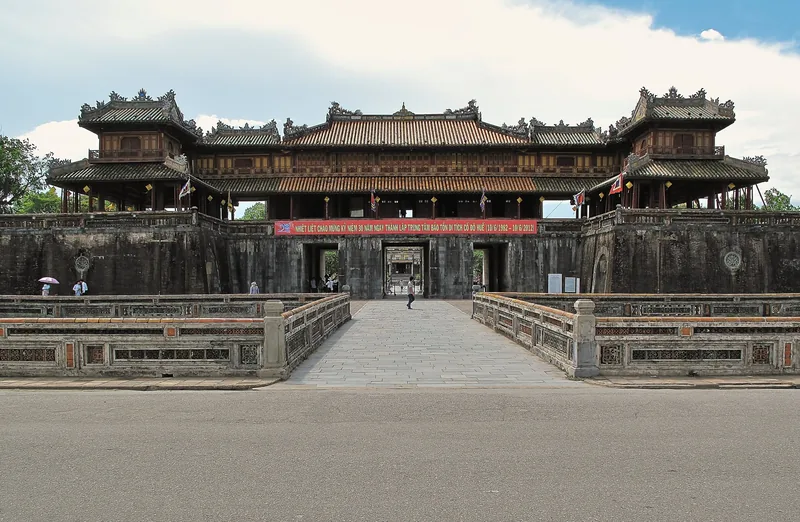
Places · Imperial City
Imperial City
The Imperial City's two zones, what has been rebuilt, tickets, hours, night openings and when not to go.
Read more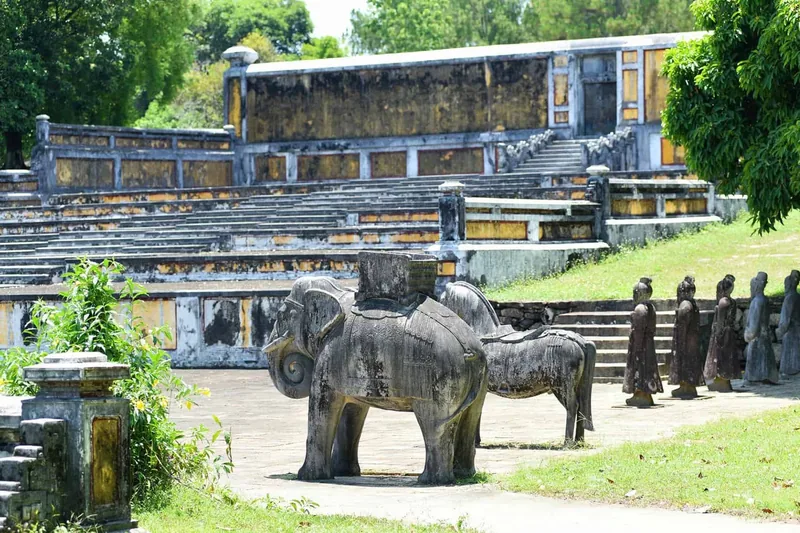
Places · Royal tombs
Royal tombs
Minh Mang, Khai Dinh, Tu Duc and Gia Long: distances, tickets, what each is like and how to combine them.
Read more
Plan · Transport
Getting to Hue
Flights to Phu Bai, trains from Hanoi and Da Nang, the heritage train, the Hai Van Pass and the road to Hoi An.
Read more
Plan · Day trips
Day trips
What the DMZ sites, Lang Co, the Hai Van Pass and Tam Giang lagoon involve as day trips from Hue, and safety points.
Read more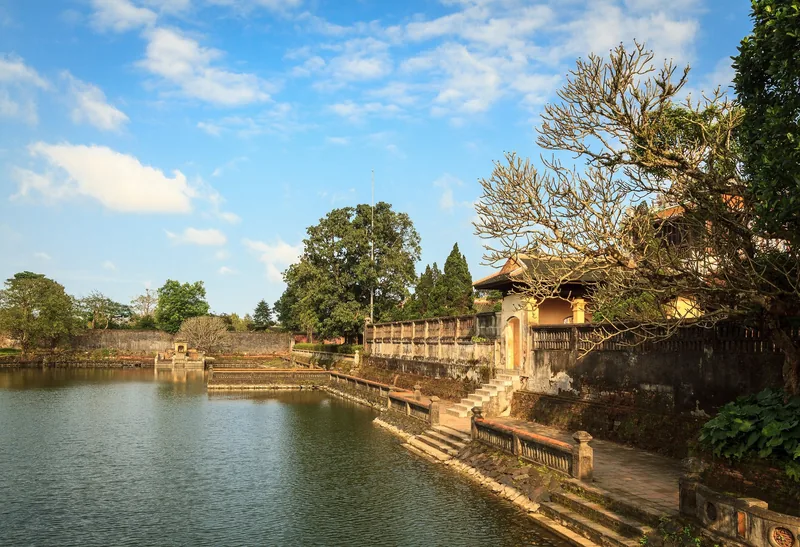
Plan · Weather
Weather and when to go
Month-by-month Hue weather: dry spring, hot summer, the September–December rains, floods and what to plan around.
Read more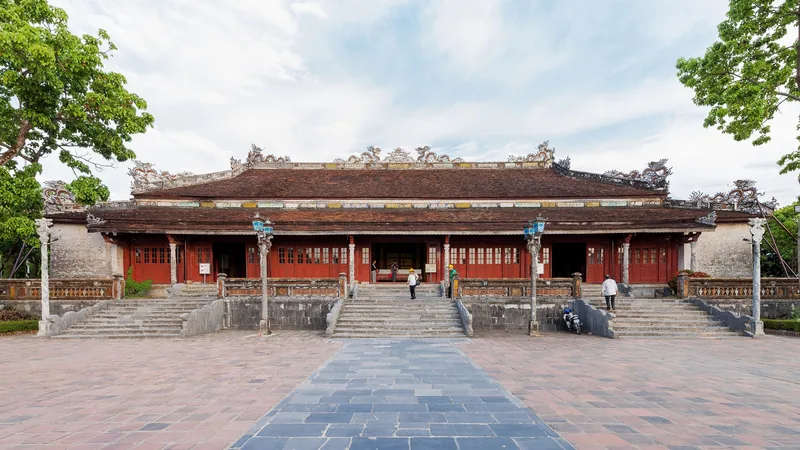
Start planning
Send a correction or a question
Tell us which page and which line, what you found at the ticket gate, on the river or on an official notice, and when. A link to the source helps us check it.